“Discover the real causes of female hair loss, common myths debunked, and treatment options that actually work to restore healthy hair.”
Hair doesn’t always reflect the personality of women but they do help. It is said that hair is the crown of an individual which he or she never takes off. Thus, hair loss is a growing perplexing problem for an individual and leads to an overall loss of beauty and confidence of a lady.
The exact reason for female pattern baldness is still under exploration, but may be related to:
Hair loss is different from that of male pattern baldness.
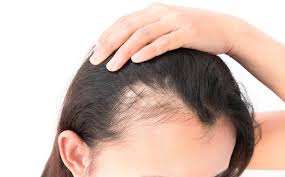
Female Pattern hair loss (FPHL) is a distinctive form of hair loss that occurs in women with hormonal disturbance . It is normal to lose up to 50-100 hair a day but In FPHL, there is diffuse thinning of hair on the scalp due to increased hair shedding or a reduction in hair volume, or both. Each strand of hair resides in a tiny hole (cavity) in the skin called a follicle. Baldness occurs when the hair follicle shrinks over time, resulting in shorter and finer hair. Eventually, the follicle does not grow new hair.
The major cause of FPHL is Polycystic Ovarian Disease which is seen in 20-30% of women in the reproductive age group and thyroid disorders.
The dermatologist will examine for signs of too much male hormone (androgen), such as (Abnormal new hair growth, Changes in menstrual periods, New acne) and signs of nutritional deficiencies, any abnormal stress and exercise patterns
After careful medical history and clinical examination, dermatologist performs certain diagnostic tests such as
Hair loss may affect confidence, self-esteem and cause anxiety. There is no known prevention and untreated hair loss in female patients may lead to permanent baldness. In most cases, hair loss is mild to moderate and if appropriate measures are taken on time, it can be brought to a halt.
The only medicine approved by the United States Food and Drug Administration (FDA) to treat female baldness is minoxidil:
It is applied to the scalp. For women, the 2% solution or 5% foam is recommended.Minoxidil may help hair grow in about 1 in 4 or 5 of women. In most women, it may slow or stop hair loss,but it should be continued for a long time to prevent rebound hair loss.If minoxidil does not work, the dermatologist may recommend other medicines, such as spironolactone, cimetidine, birth control pills and ketoconazole, among others.
During hair transplant, tiny plugs of hair are removed from areas where hair is thicker and placed (transplanted) in areas that are balding. Minor scarring may occur where hair is removed. There is a slight risk of skin infection. You will likely need many transplants, which can be expensive. However, the results are often excellent and permanent. Nowadays a recent technique of Bio-hair transplant is evolving in which artificial hair are used and shaving of scalp before the procedure are not required. Hair weaving, Hair bonding, and artificial hair strands are other solutions.
Finally concluding again we would say that hair are a queen’s crown and to maintain that crown proper diet rich in vitamins and protein, proper exercise and stress-free life is required
Share your reports and get an expert review and cost estimate within 48 hours.

Liver Transplant Surgeon, Gastrointestinal Surgeon
Experience: 29 years




Get your personalized treatment plan and quote within 48 hours.