STRABISMUS
What is it?
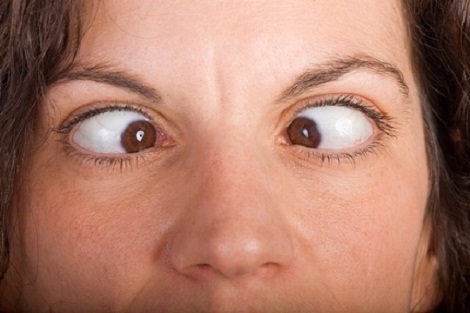
Squint or strabismus is a condition in which the eyes are not in proper alignment with each other. It is derived from the 17th century Greek word ‘strabizein’ (to squint). Commonly, one of the eyes could point inwards (esotropia), or outwards (exotropia). The incidence is 4-6% in India.
Strabismus is common in children at birth and is insignificant until 3 months of age. If it persists beyond that age, it needs to be addressed.
Strabismus in adults is very much treatable and contrary to what is usually believed, strabismus in children does not go away on its own; so treatment is necessary.
Various different classifications of strabismus
-
On the basis of latency
Strabismus can either be manifest or latent.
-
Manifest type of strabismus (Heterotropia)
Strabismus is said to be manifest when a target is viewed by a patient binocularly without occlusion of either eye. The patient is incapable of achieving fusion of images by aligning the gaze of each eye.
Heterotropia can be of different types –
-
Esotropia
-
Exotropia
-
Hypertropia
-
Hypotropia
-
Cyclotropia
-
A combination of these
-
Latent type of strabismus (Heterophoria)
Strabismus is said to be of the latent type if it only occurs when one eye is covered. Patients can usually maintain fusion even though there is mal-alignment.
Heterophoria can be of these types –
-
Esophoria
-
Exophoria
-
Hyperphoria
-
Hypophoria
-
Cyclophoria
-
A combination of these
-
On the basis of onset
Strabismus can be classified into two types based on its time of onset.
-
Congenital type of strabismus is present from birth.
-
Acquired type develops later due to either trauma or injury to the eyes or due to an illness.
-
On the basis of laterality
Based on which of the eyes deviate, strabismus can be classified into two types.
-
Unilateral strabismus is when only one eye consistently deviates.
-
Alternating strabismus is when either of the eyes deviate.
-
On the basis of direction
Strabismus can be further classified on the basis of the direction of deviation.
-
Horizontal Deviations
-
Exo – Outward deviation of the eye
-
Eso – Inward deviation of the eye
-
Vertical Deviations
-
Hyper – Upward deviation of the eye
-
Hypo – Downward deviation of the eye
-
Cyclo is used to refer to torsional strabismus ,that is when the eye rotates around the anterior-posterior axis. This type is rare.
-
On the basis of magnitude
-
Comitant – The magnitude remains the same in all gazes
-
Incomitant – The magnitude varies with the gaze
Physical effects of strabismus
The eye is surrounded by six different muscles that work as a team. This is what makes both the eyes focus on the same object.
When someone suffers from strabismus the muscles are not working in tandem with each other, and due to this, only one eye focuses on an object and the other deviates . When this happens, each eye sends a different image to the brain and this confuses it. In children, the brain can learn to suppress the image from the weaker eye, which consequently reduces the vision in that eye.
Vital components of visual development, namely ‘binocularity’ and ‘depth perception’ develop between 3-6 months of age and the existence of a mal-alignment of both eyes acts as a hindrance to the completion and effectiveness of the process.
Also, up to 8 years, which is known as the critical period of development, the central nervous system possesses what is known as ‘plasticity’ where it has the ability to change functionality with time. So a squinting eye adapts according to the situation and develops subnormal vision, namely suppression or ‘amblyopia’, in an attempt to offset the resulting ‘diplopia’ or double vision.
This suppression or amblyopia also known as lazy eye, is loss of vision in the weaker eye that the brain ignores.
Visual function and strabismus are dependent on each other, this means that poor vision can cause strabismus or vice versa.
As stated previously, even if both eyes have perfectly fine vision before the onset of strabismus, within months or even weeks the weaker eye loses most of its vision.
On the other hand, in some cases, poor eyesight in one eye can lead to strabismus. This happens because the weak eye does not produce enough or even useful visual information to make it align with the stronger or good eye.
Strabismus that is congenital has a much stronger impact because it causes disturbances in the proper and complete development of the child’s visual function. Normal vision is binocular and this is because both our eyes produce a slightly different image and the merger of these images is what produces such vision.
The biggest dangers that exist due to untreated strabismus are loss of vision, amblyopia or suppression, lack of depth perception and poor cosmesis. In other words, it is a threat to binocularity, which a superior property of the human vision. Hence any observation of crossed yes has to be immediately examined by a paediatric ophthalmologist at the earliest.
Applying the same principle of neuro-plasticity, affected eyes can be upgraded to near normalcy or complete normalcy with rigorous treatment.
There are several myths related to squint that prevents or delays health seeking behaviour by patients. Some of them are –
-
Squint disappears by itself -Barring rare occurrences, timely intervention is absolutely necessary.
-
Squint brings good luck - Untreated strabismus can bring more bad luck than one can imagine in the form of blindness, or lack of stereopsis or depth perception.
-
Squint is only a cosmetic problem - It has functional day to day consequences, it’s only cosmetic if deferred beyond the critical period.
-
Squint is not treatable - Certainly not! There are as many varieties of squint as there are options for treatment.
-
Small children cannot undergo surgery for squint - Literature says a child can be operated as early as 6 months of age.
-
Squint does not affect adults - There is no age that is spared by strabismus.
Symptoms
Symptoms of this condition are fairly obvious and can be easily noticed by others. They include –
-
Squinting with one eye
-
Head tilts to one side
-
Eyes that don’t move in tandem
-
Crossed eyes
Certain symptoms may occur due to the inability of the person to perceive depth and those maybe clumsiness, lack of coordination and being less spatially aware.
Other symptoms that are felt by the patient include -
-
Double vision
-
Reduced perception of depth
-
Straining of the eyes
-
Headache
-
Fatigue
Diagnosis
Tests such as cover testing or the Hirschberg test are used to diagnose strabismus; the prism tests measure the condition and tests for binocularity, its impact on the vision of the person.
Treatments
The aim is to improve binocular vision and ocular alignment.
There are various different treatments available and the most suitable one is decided based on the type of strabismus, severity and the cause.
But, the main treatment options are
-
Glasses - Glasses or contact lenses are used if the patient has strabismus due to uncorrected refractive error.
-
Eye patches – These help strengthen the weakened eye.
-
Surgery – It is used to realign the eye muscles.
-
Prisms
-
Exercises
The effectiveness of the treatment of strabismus is decided by the time the doctor is approached, its type, the compliance level of the patient, the magnitude of deviation and the sensory adaptation. Remember, if the eyes are kept cross, you’re in for a huge loss.
Psychosocial impact
More than the physical effects, the psychosocial and motor difficulties experienced have a greater impact on the patients,especially children, as the overall development is hampered and this in turn may cause emotional distress and anxiety which ultimately is detrimental to their social life. . They may not be able to use social cues such as eye contact and connection to be able to have meaningful interactions leading them to feel isolation, embarrassment or anger.
Adults may use various methods to cope with the stressful situations that may arise, and they may not be the healthiest ones. These include avoiding activities, shunning attention, denial of their condition and making adjustments in personality to feel included. Their difficulty with interacting and communicating leads to altered happiness and confidence, once again decreasing the quality of life.
Hence, symptoms should not be ignored and strabismus should not be left untreated because it has a negative impact on the health and lifestyle of a person.
But it is treatable and a person can live a normal life at par with those that aren’t affected by strabismus.